637.4K views
BrainZap#1
Faceless animated explainers about human origins have become a recognizable corner of online video.
Ranked by the views of each channel’s top video.
We already make this format. Start a video in Studio, or open the niche to watch our samples first.
Narrated stick-figure films that answer one curious everyday question each.
About 2,100–2,600 credits a video
Why do you remember embarrassing moments for years?9:16 vertical · 1:00
Why does the other checkout line move faster?16:9 widescreen · 1:00
Why do you get sleepy after a big lunch?9:16 vertical · 1:00
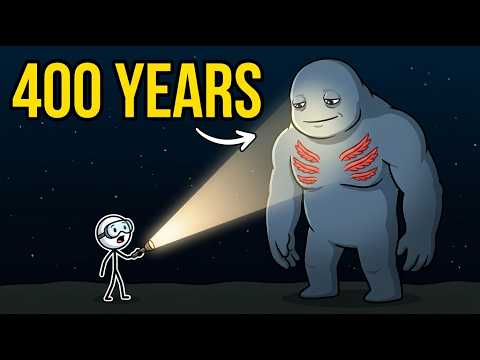
Faceless animated explainers about human origins have become a recognizable corner of online video. Their defining trait is simple: no presenter appears on camera. Instead, the viewer sees a narrator's voice paired with minimalist animation, most often stick figures or simple cartoon characters moving across plain backgrounds. The visuals rarely aim for realism. Their job is to make an unfamiliar subject feel approachable, turning millions of years of prehistory into something that can be followed in a few minutes.
What these videos make is usually a blend of education and speculation. Some pieces walk through the broad strokes of human evolution: the emergence of bipedal walking, the gradual growth of brain size, the spread of early tool use, and the migrations that carried our ancestors across continents. Others lean into hypotheticals, asking what might have happened if certain evolutionary pressures had gone differently, or imagining how humans might have adapted to environments far from the savanna. The line between fact and imagination is often drawn loosely, and the best examples signal clearly when they are moving from established science into conjecture.
The format has several practical advantages that help explain its appeal. Animation lets a creator illustrate concepts that would be impossible to film, such as the anatomy of an extinct species or the landscape of a prehistoric coastline. Stick figures in particular are cheap to produce compared with detailed character art or live footage, which lowers the barrier for a small team or a single person working alone. Because no face is shown, the creator's identity stays in the background, and the focus remains on the story. Viewers, in turn, tend to concentrate on the narration and the diagrams rather than on who is speaking.
The approach has deeper roots in older media. Textbook diagrams, museum dioramas, and classic educational films all used simplified figures to explain biology and anthropology long before online video existed. Early science programs relied on voiceover narration over illustrations, and children's educational shorts used cartoon characters to teach history. Faceless online channels inherited that tradition and adapted it to the rhythms of short-form and long-form platforms, where pacing, a clear hook, and a memorable visual shorthand matter a great deal.
The spread of the format owes something to how well it fits the subject. Human origins is full of questions that invite curiosity: why we walk upright, how language developed, why there was more than one human species at once. A stylized presentation makes these questions feel like a shared puzzle instead of a lecture from an authority. It also travels easily across languages, since the visuals carry much of the meaning and narration can be swapped or subtitled.
There are real limits worth keeping in mind. Simplified animation can flatten complicated science, and speculative content can circulate as if it were settled fact. Viewers benefit from checking claims against academic sources, especially when a video's title promises a surprising revelation. Still, the faceless animated explainer remains a durable and flexible way of telling stories about where humanity came from, and its mix of clear visuals, accessible narration, and open-ended curiosity explains much of its continued reach.